Ghana’s Healthcare at a Breaking Point: The "No Bed Syndrome" Crisis and the Nationwide Push for Reform
Trainova Publications
•
The "No Bed Syndrome" has once again ignited a fierce national debate in Ghana, reaching a boiling point this week following a series of distressing reports from major referral centers. What began as isolated complaints has transformed into a documented systemic failure, forcing the Ghana Registered Nurses and Midwives Association (GRNMA) to demand an immediate emergency stakeholder intervention with the government to prevent a total collapse of emergency care.
The Catalyst: A System Overwhelmed
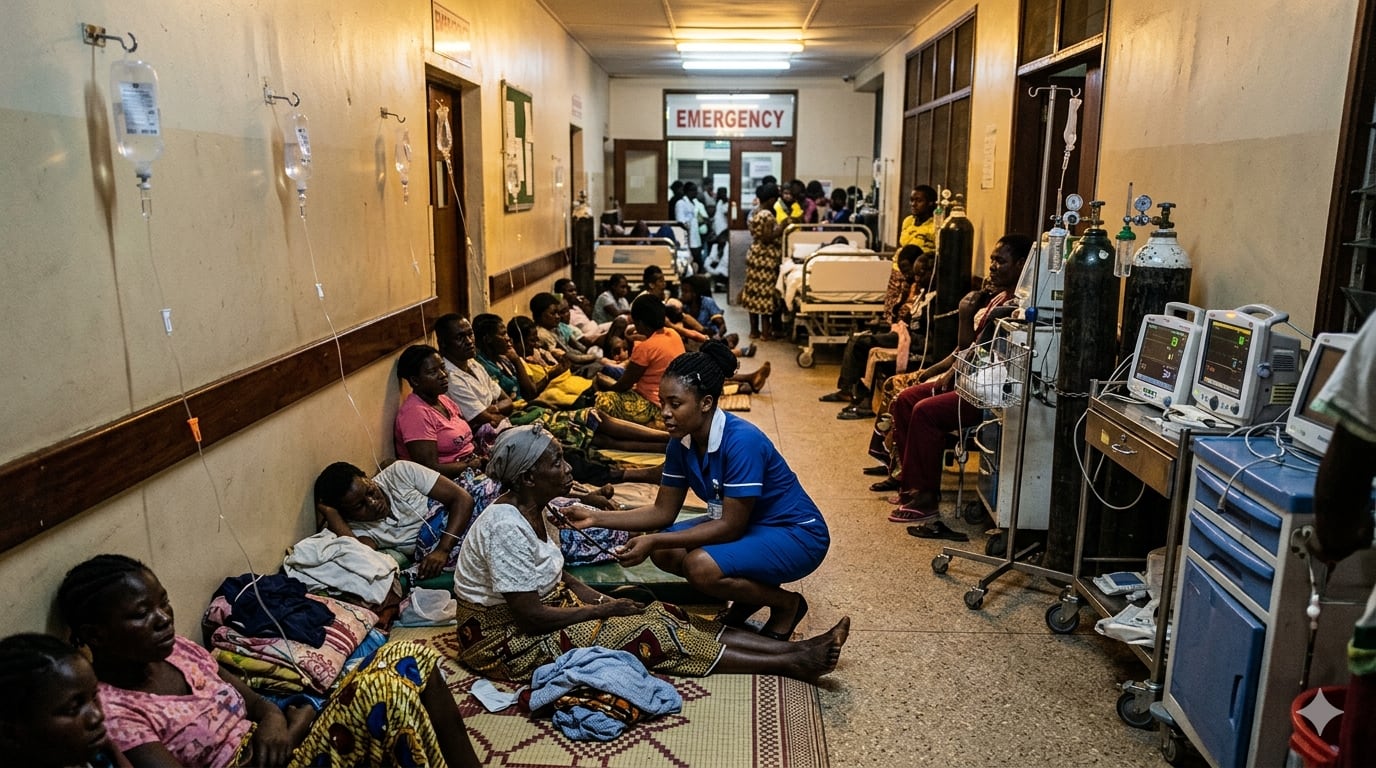
The current wave of public outcry was triggered by viral footage and investigative reports from Korle Bu Teaching Hospital (KBTH) and the Greater Accra Regional Hospital (Ridge). The visuals depicted a harrowing reality: emergency wards so congested that patients—some in critical condition—were being treated in plastic chairs, on wooden benches, and even on floor mats in hospital corridors.
The GRNMA’s President, Perpetual Ofori-Ampofo, has been vocal about the physical and psychological toll this takes on healthcare providers. Nurses are reportedly being forced into the "unethical" position of turning away dying patients because there is quite literally no space to place a stretcher, let alone a bed.
The Staggering Deficit by the Numbers
The crisis is rooted in a severe infrastructure-to-population mismatch. Data released by health advocates this week highlights a grim landscape:
The Bed Gap: Ghana currently averages roughly 0.7 beds per 1,000 people, a sharp contrast to the 5 beds per 1,000 recommended by the World Health Organization (WHO) for functional healthcare systems.
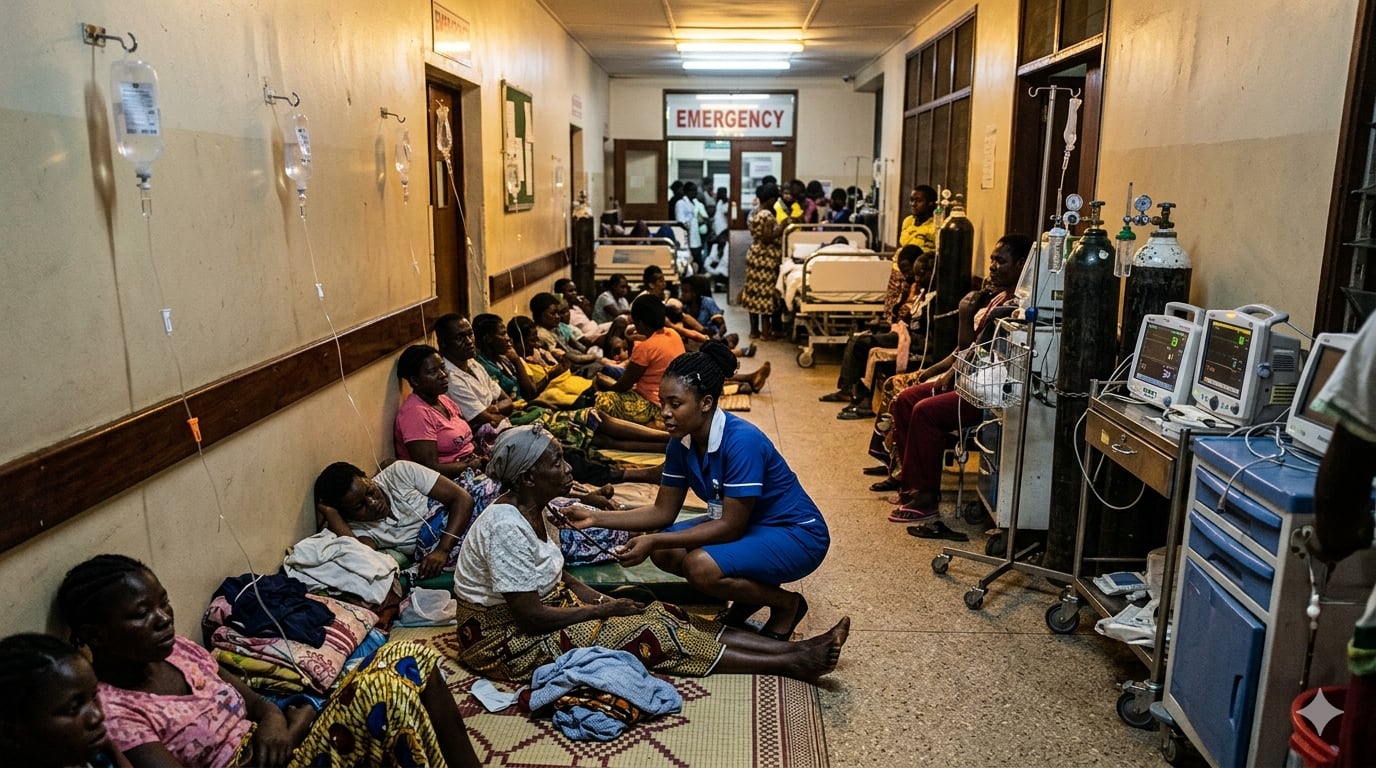
Occupancy Surge: Major teaching hospitals are reporting occupancy rates between 120% and 150%. This means for every 10 beds available, there are 15 patients requiring urgent admission.
Funding Shortfalls: Despite international commitments, Ghana’s health budget remains below the 15% Abuja Declaration target, hovering around 11%, which critics argue has stalled the completion of critical "Agenda 111" projects intended to decentralize care.
Government Intervention: The "Digital Cure" and Strategic Transfers
In response to the mounting pressure, Health Minister Kwabena Mintah Akandoh and the Ministry of Health have outlined a multi-pronged recovery strategy. The centerpiece of this plan is the Real-Time Digital Bed Tracker. This system aims to provide a live dashboard for all ambulance drivers and emergency units, showing exactly where a vacant bed exists across Greater Accra and the Ashanti Region. The goal is to eliminate the "deadly merry-go-round" where ambulances move from one full hospital to another while patients deteriorate.
Furthermore, a "Coordinated Referral Policy" has been activated. This allows over-burdened facilities like Korle Bu to bypass traditional bureaucracy and immediately transfer stabilized patients to less-congested peripheral hospitals, such as the University of Ghana Medical Centre (UGMC) and the Bank Hospital, to free up emergency slots.
A Regional Crisis: The Brain Drain Factor
While the focus remains on Accra, the "No Bed" crisis is exacerbated by a secondary issue: human resource flight. In the Western North Region, reports indicate that 97 health workers have left their posts this year, with a majority of newly posted doctors failing to report to their stations. This lack of personnel means that even when beds are available in rural areas, there is no staff to manage them, further funneling patients into the already-choked urban centers.
The Outlook for 2026
As the government prepares for a high-level stakeholder meeting involving the Ghana Medical Association (GMA) and the GRNMA, the pressure is on to move beyond temporary fixes. The Ghanaian public is demanding not just "trackers" and "dashboards," but the physical completion of the 111 district hospitals promised years ago. Until these structures are operational and staffed, the "No Bed Syndrome" remains a looming shadow over the country’s progress.