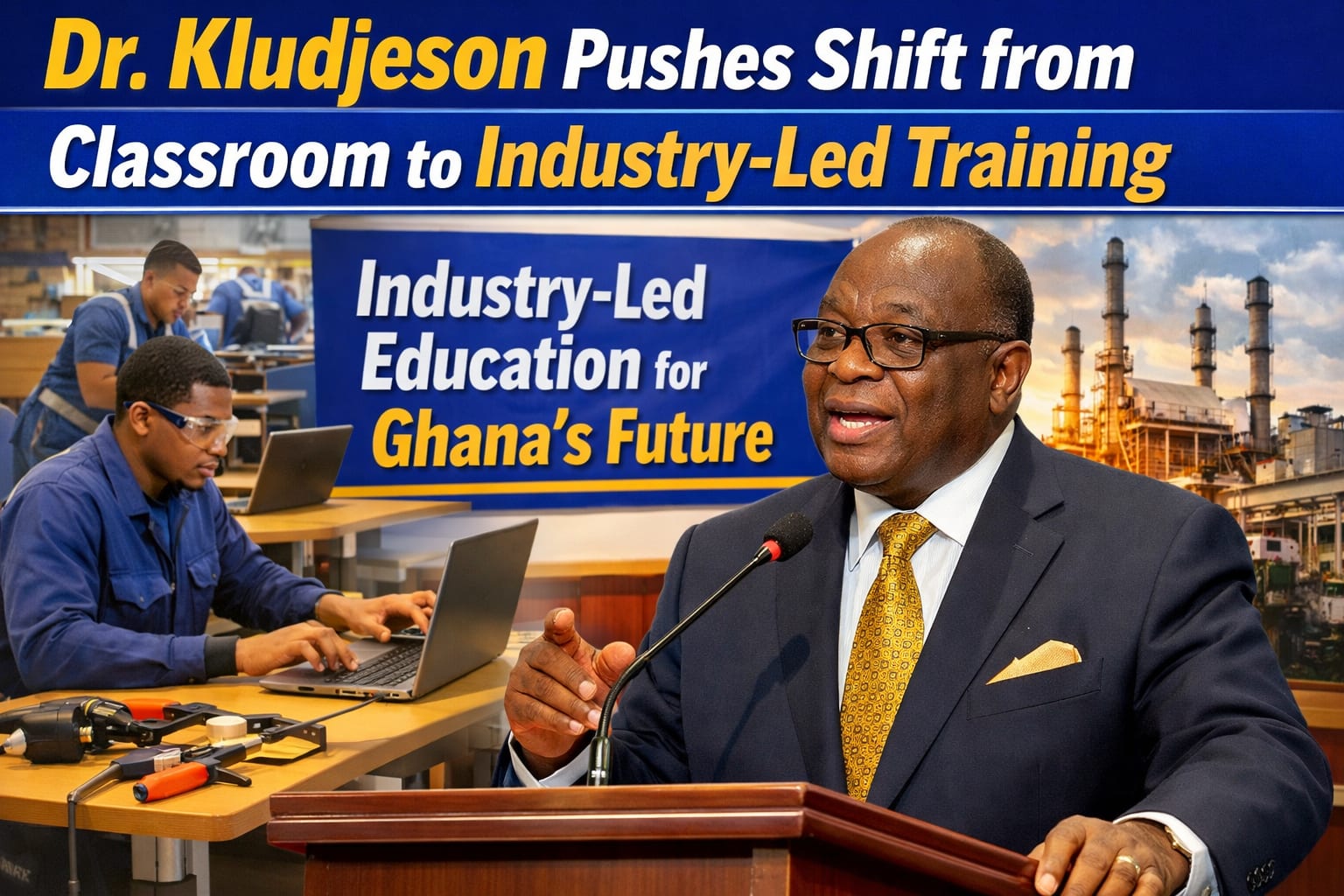
Dr. Prince Kofi Kludjeson Calls for Industry‑Led Over Classroom‑Based Education in Ghana
Trainova Publications
Education should no longer be viewed merely in terms of classrooms and textbooks, but rather as a powerful engine for industry and employment, Dr Prince Kofi Kludjeson has said. Speaking at the Professor Jophus Anamuah-Mensah Annual Public Lecture on TVET Transformation in Africa at the University of Education, Winneba, the former President of the Association of Ghana Industries called for a bold shift from the current classroom-based model to one that is industry-led and practice-oriented.
The problem with today’s education
Dr Kludjeson noted a growing gap between what students learn in school and what industries actually require. Many graduates leave with certificates but lack the practical, hands-on skills employers demand, which in turn limits job creation and slows industrial growth. He described this disconnect as a major barrier to transforming Ghana’s large youth population into a competitive workforce.
How training should change
He proposed that universities and TVET institutions collaborate closely with real companies, particularly in technology, engineering, agribusiness and renewable energy. Rather than relying solely on donor-funded projects, educational institutions should engage businesses with capital and expertise to help design practical curricula and offer on-the-job training.
He also emphasised the need for skills-based programmes in which students earn recognised certifications and gain real work experience before graduating. This, he said, would make education more relevant and improve young people’s chances of securing decent employment or starting their own businesses.

Cost, access and fairness
Dr Kludjeson highlighted that the cost of higher education in Ghana is both high and uneven, with some students spending more on accommodation than on tuition. He described this situation as unsustainable and unfair, particularly for students from less privileged backgrounds.
He urged the government and institutions to harmonise fees, housing and scholarship policies so that quality education becomes more affordable and accessible across the country.
Global visibility and urgency
Another key issue he raised was the global visibility of Ghanaian academics. He questioned how many Ghanaian professors attend international conferences, obtain industry-recognised certifications, or engage with global research networks.
To address this, he recommended a focused 24-month reform period under the current administration to begin reshaping the education system, particularly for young people in underserved communities. His vision is for a system in which factories, farms and technology firms are as important as classrooms, enabling Ghana to create real jobs and position itself as a regional innovation hub.
Share this article